
Associate Professor Yusuke Sakurai’s co-authored paper with RIHE’s student, Shizuki Saruta, is published on Research in Comparative and International Education. The theme is “International academics’ institutional integration and social adaptation among different local language competence groups in Japan”.
For details, please visit here.
Authors: Yusuke Sakurai, Shizuki Saruta, and Shannon Mason
Title: “International academics’ institutional integration and social adaptation among different local language competence groups in Japan”
Journal: Research in Comparative and International Education
DOI: https://doi.org/10.1177/17454999251379390
Preprint: https://osf.io/preprints/edarxiv/qshga_v1
First published online: September 24, 2025
outline:
International Academics in Japan: Language, Integration, and the Unexpected Reality
Key Research Findings
This study challenges conventional understanding of international academics’ experiences in Japan. Contrary to widespread assumptions, the study reveals that Japanese language competence does not consistently explain the degrees of institutional integration success and social adaptation beyond academia among international early career academics.
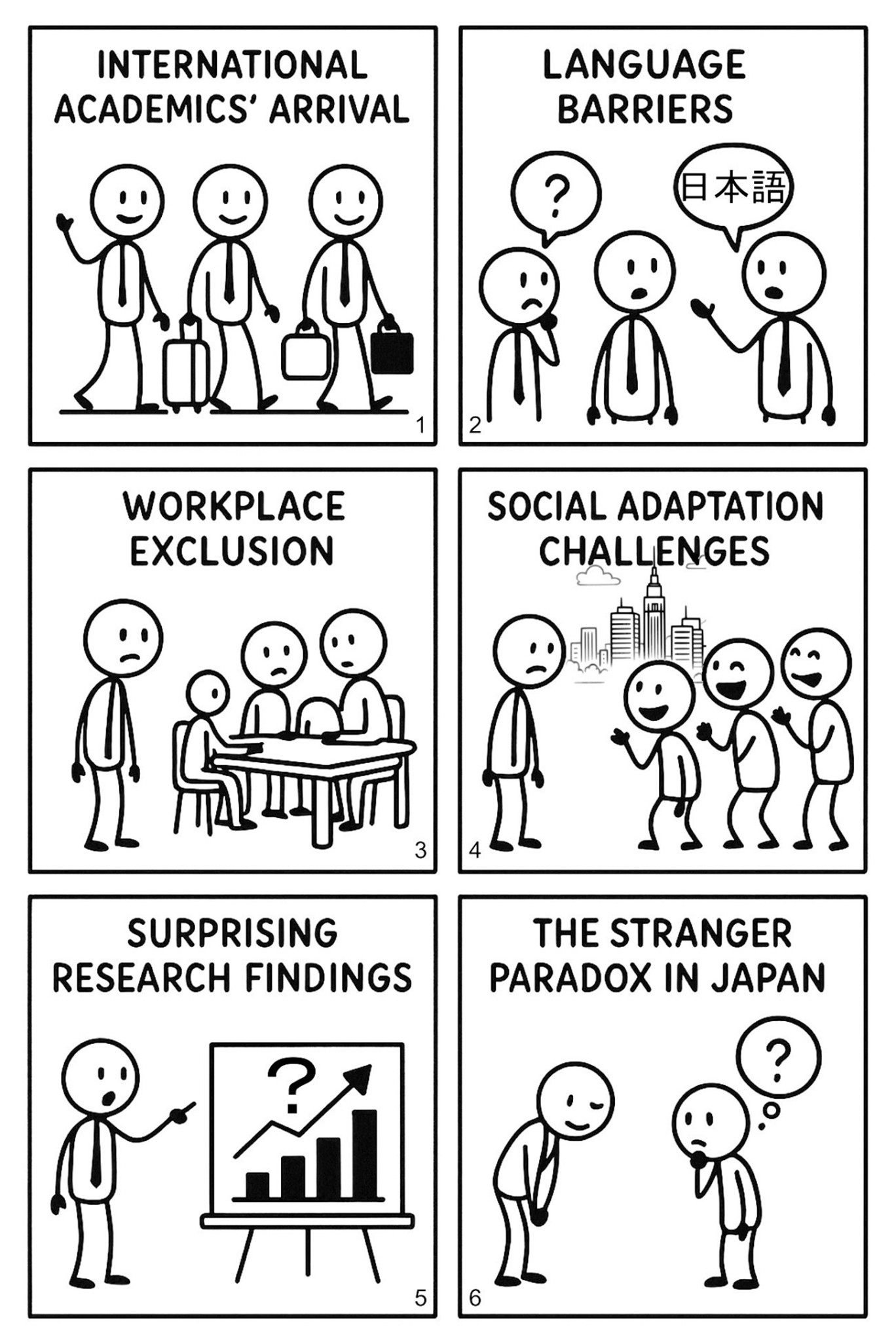
An image generated with AI by Perplexity
The Study
The study surveyed 305 international academics across various Japanese universities and research institutes. It examined their experiences across different Japanese language proficiency levels—from beginners to native-equivalent speakers. The results were unexpected:
Institutional Integration: No significant pattern was found between Japanese language ability and workplace integration measures including collegiality, sense of belonging, and intention to stay. Academics with varying language skills showed similar levels of institutional integration.
Social Adaptation: While some association was found between language competence and social adaptation beyond academia, particularly in interpersonal interactions, the effect was minimal. The study suggests that the practical impact of language proficiency on daily life adaptation was surprisingly limited.
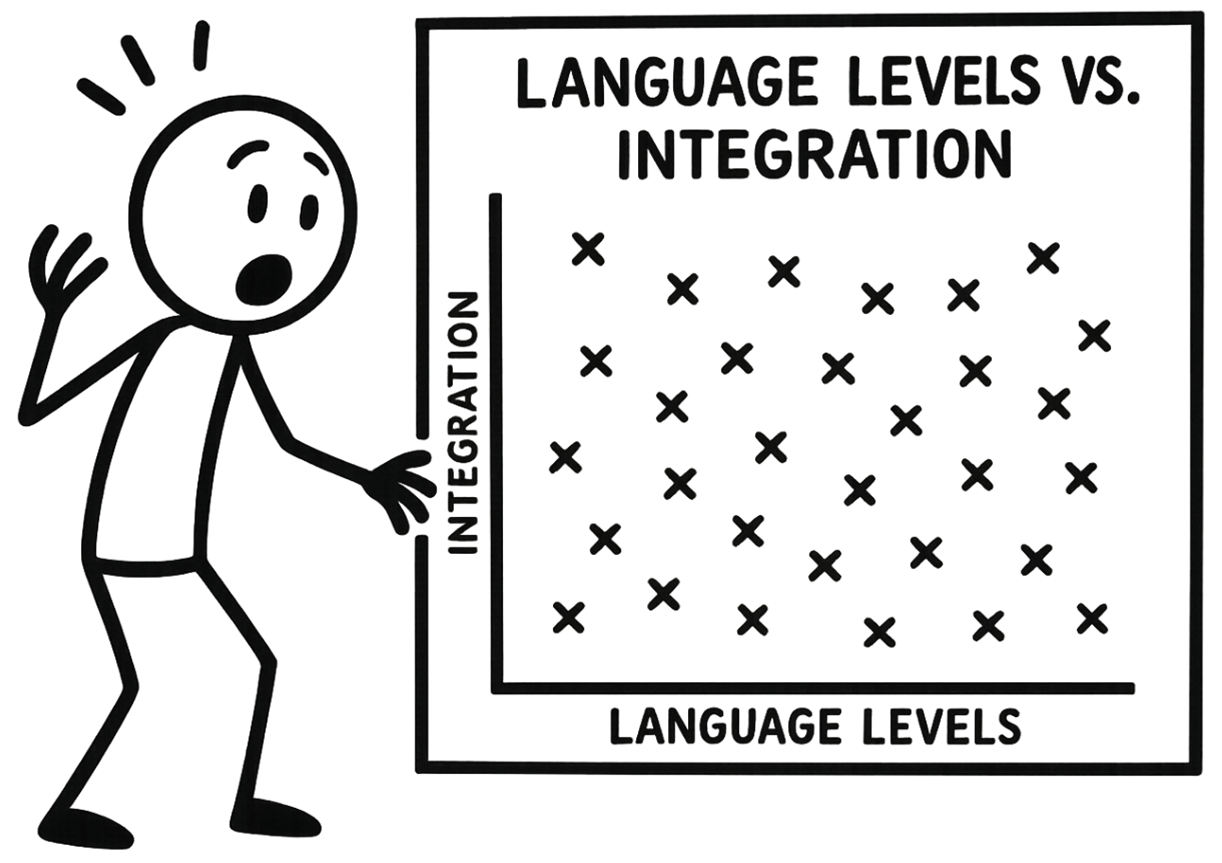
An image generated with AI by Perplexity
The Complex Reality
The study illuminates the multifaceted nature of international academic experiences in Japan. Rather than language barriers being the primary obstacle, the study suggests that other factors play more significant roles in determining success:
For example, workplace culture and collegiality appear more influential than language skills Institutional support systems, and strategic inclusive initiatives may matter more than individual language competence The “stranger paradox”—being physically present but psychologically distant—affects the relationships of international and local academics regardless of international academics’ Japanese ability. It remains still unclear which factors best explain the degree of institutional integration and social adaptation among foreign researchers in Japan.
Implications for Higher Education Policy
These findings have important implications for Japanese universities seeking to further internationalise. The 45% increase in international academics during the 2010s, driven by initiatives like the Top Global University Project, requires more nuanced support strategies than simply providing language training.
The study suggests that institutions should focus on creating inclusive environments, improving collegial relationships, and developing strategic initiatives rather than placing primary emphasis on Japanese language acquisition. While language training remains valuable, particularly for quality of life and specific administrative tasks, it should not be viewed as the sole solution to integration challenges in workplace.
An image generated with AI by Perplexity
The Broader Context
This research contributes to our understanding of academic mobility in an increasingly globalised higher education landscape. As universities worldwide compete for international talent, the Japanese experience offers valuable insights into the complex factors that determine not only whether international academics can thrive in their new environments, but also how local researchers and staff members can collaboratively build a sound research community.